Designing a Remix or Deluxe Cover for Your Own Music: Variations That Stay Related
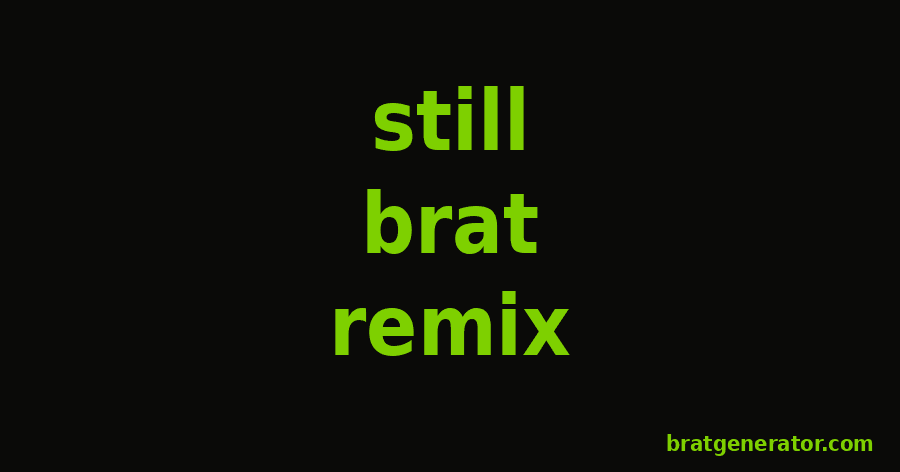
Many artists release remix or deluxe versions of a project and want the new cover to feel related but different. This guide gives a practical method for creating variation sets, using a bold text design from the free Brat Text Generator as an example. Use it for your own music; do not recreate anyone else’s covers.
What a variation set needs
A good set shares one or two anchors and changes the rest. Anchors help listeners recognize the family: a typeface, a color or a layout. Changes signal the new version.
| Anchor | Variation |
|---|---|
| — | — |
| Layout (one word in the center) | Color changes |
| Typeface | Word changes, for example “remix” added |
| Color | Background texture added |
Method
- Design the original cover and note the hex codes and font. See the colors guide.
- Choose one change only for the remix: invert the colors, or add a second word.
- Make three options in the generator and compare them at thumbnail size.
- Check that the remix cover is clearly different at 100 px.
Technical specs
See the cover art spec guide: commonly a square of about 3000 x 3000 px; confirm with your distributor.
Naming and metadata
Use clear titles such as “Title (Remix)” so services group the releases correctly, and keep artist names consistent.
Avoid confusion
Do not make the new cover so similar to the original that listeners cannot tell which is which in a list. Also avoid copying another artist’s cover system.
Related
For playlists featuring the releases, see the playlist cover guide.
Planning a release family
When you publish an original, a deluxe edition and a remix, the covers should look related but distinct. Keep one constant, such as the typeface or the grid, and change one variable, such as the background colour or a short label.
Checking the lineup
Place the covers side by side at thumbnail size. If you cannot tell them apart, change the colour more. If they look unrelated, bring back the shared type or layout.
Metadata and credits
Make sure the titles, credits and artwork you upload are yours or licensed to you, and follow your distributor’s artwork rules. Keep a copy of the final files and the settings used.
A worked example: a three-track remix pack
An indie artist releases a song and later a remix pack with three versions. The original cover uses a one-word title on lime. For the remix pack, she keeps the layout and typeface, switches to a white background with black text, and adds the word “remix” in smaller type under the title. At 100 pixels wide, the two covers still look related but are easy to tell apart in a playlist list.
A variation checklist
| Question | Answer to aim for |
|---|---|
| Can a listener tell the original from the remix at thumbnail size? | Yes |
| Is one anchor clearly shared? | Yes: layout or typeface |
| Is the text legible at 100 px? | Yes |
| Does the cover copy anyone else’s design? | No |
Deluxe editions
Deluxe covers usually add a small badge or label rather than a new design. Keep the badge consistent across future releases so listeners learn the system.
Metadata
Cover art is only part of a release. Check that the title, version label and artist spelling are correct and consistent across all services.
Planning a remix or alternate edition cover
A remix edition usually needs a cover that clearly relates to the original while being visibly different. Keep the same typeface and layout, but change one variable such as the background colour or an added subtitle. That makes the pair easy to recognise in a grid of releases.
A small variation system
| Variable | Original | Variation |
|---|---|---|
| Background | Primary colour | Inverted or darker tone |
| Title | Full title | Title with a short label |
| Layout | Centred | Left aligned |
Rights and naming
Only create covers for your own music or music you have permission to use, and avoid copying another artist’s artwork or title.
What makes a remix cover work
A remix or deluxe edition cover has two jobs: it must clearly connect to the original and it must look different enough that people notice the new version. The easiest way to do both is to keep one thing constant and change one other thing.
A tiny design system
| Element | Keep | Change |
|---|---|---|
| Typeface and weight | Yes | No |
| Layout and margins | Yes | No |
| Background colour | No | Yes |
| Label such as remix | No | Add |
Naming the editions
Use short, clear labels that listeners can recognise at a glance, and keep the label small relative to the title so the title stays dominant. Make sure the label is also present in the track title and metadata, so the artwork and the listing agree.
Checking before upload
Compare the original and the remix cover at the smallest display size. If the two look identical, increase the colour change. If they look unrelated, restore the shared type or layout. Keep your final files and notes about the settings for later releases.
Checking the covers in context
Place the covers next to each other in a mock playlist and a mock grid. If the order is unclear, add small labels. If the covers look too similar at thumbnail size, change the background colour or add a short word.
Keeping a style guide
Save the hex colours, fonts and layout of the original so a remix cover can be made later without guessing.
Frequently asked questions
How different should it be?
Different enough to tell apart at thumbnail size.
Do I need new artwork for every remix?
Not always; one cover for a remix pack is common.
Should I change the color for every release?
Changing color for variants is a simple, effective signal.
Can I reuse the original file?
Yes, and edit a copy so the original stays intact.
How different should the variant be?
Change one or two elements and keep the rest the same so listeners connect the two.
Brat Generator is an independent tool and is not affiliated with, endorsed by, or sponsored by Charli XCX, her record label, or any related brand. Any album or trademark names are mentioned only to describe a visual style.